Guide · 8 min read
PLA vs PETG vs ABS vs TPU: real use cases and which to pick
Updated April 2026 · Methodology and sources
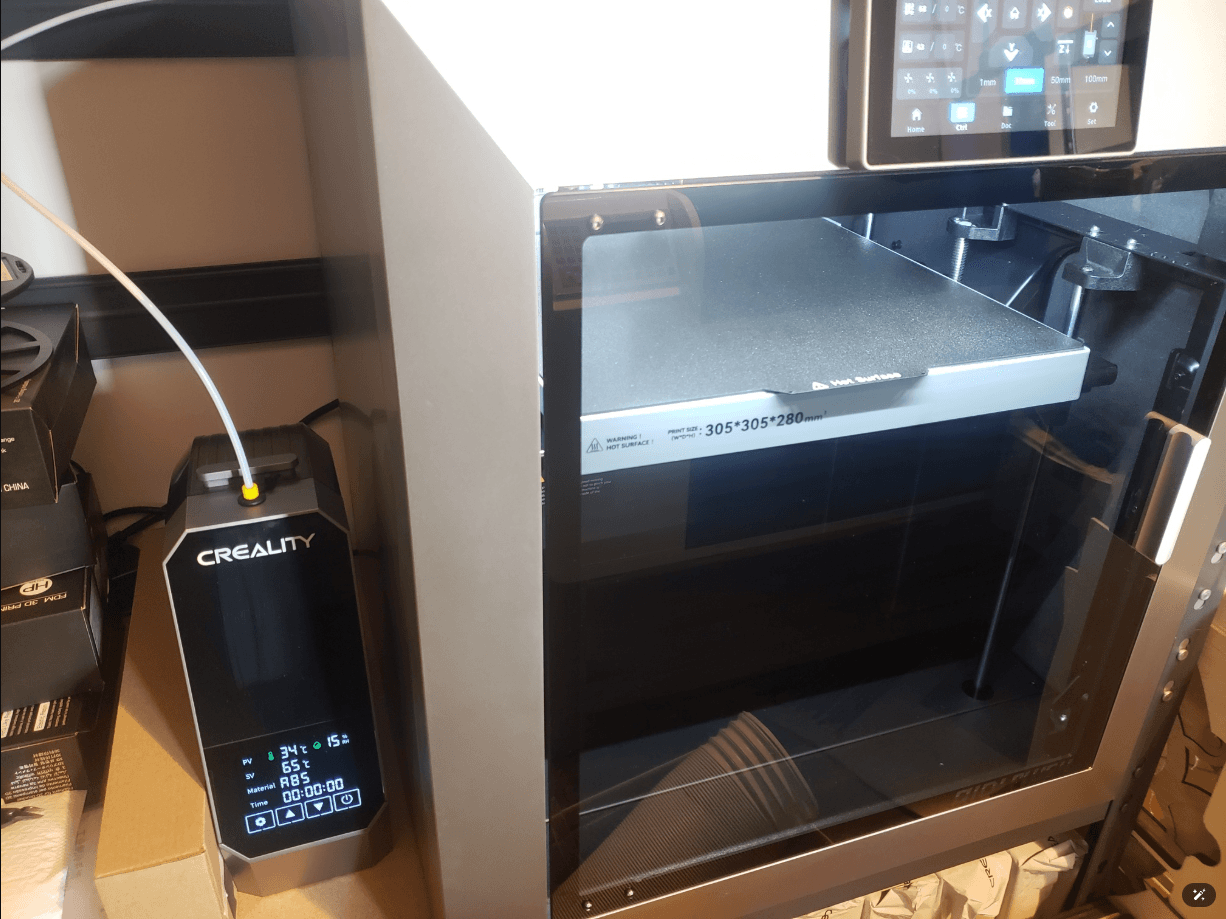
Four materials cover more than 90% of hobbyist 3D printing: PLA, PETG, ABS, and TPU. Every other material (ASA, PC, Nylon, fiber-reinforced) is a variation or upgrade path from one of those four. If you can pick the right base material, you rarely need the exotic stuff.
This guide walks through each one in plain language: what it's good at, what it's bad at, when to reach for it, when to avoid it. The Material Comparison tool has the specs side by side if you prefer a table.
PLA: the default, and the right default
Polylactic acid. Plant-based plastic. Prints at 190 to 220°C with a bed around 50 to 60°C. Hardly warps. Works on open printers. Most hobbyist printers come tuned for PLA out of the box.
Use PLA for: anything indoor, display models, prototyping, figurines, detailed prints, organizers, brackets for light-duty applications, miniatures, desk toys, pretty much anything you'd 3D print for fun.
Avoid PLA for: outdoor parts (degrades in UV), anything that lives in a car in summer (softens around 55°C), parts that need to flex repeatedly (brittle, snaps), food-safe applications (layer lines trap bacteria even on food-safe PLA brands).
Typical price: $18 to $25 per kg for decent-quality PLA. Below $15 you're getting unknown-origin material that often prints inconsistently.
PETG: PLA's tougher cousin
Polyethylene terephthalate glycol. Chemically related to the plastic in water bottles. Prints at 230 to 250°C with a bed at 70 to 80°C. Stronger than PLA, more flexible, handles outdoor use.
Use PETG for: outdoor parts, functional parts under load, parts that need some impact resistance, water bottles or storage containers (certified food-contact brands only), garage and shed items, tool holders, parts exposed to heat up to about 75°C.
Avoid PETG for: fine detail (stringing is harder to tune out), parts that slide or snap together tightly (PETG is softer than PLA and deforms under pressure), beginners on their first week of printing.
Typical price: $22 to $30 per kg. Slightly more expensive than PLA, worth it for functional parts.
ABS: legacy tough-guy, mostly outclassed now
Acrylonitrile butadiene styrene. The plastic in LEGO bricks. Prints at 240 to 260°C with a bed at 90 to 110°C. Requires an enclosed printer and good ventilation (fumes are unpleasant and possibly harmful over long exposure).
Use ABS for: parts that need high heat resistance (up to about 100°C), parts you want to acetone-smooth, automotive interior parts, traditional manufacturing-style mechanical parts.
Avoid ABS for: open printers (will warp), parts exposed to sunlight (UV degrades it badly, use ASA instead), anything where you don't want fumes in your living space.
Typical price: $20 to $28 per kg. ABS is cheap but the enclosure requirement raises the total cost of ownership significantly. Most hobbyists skip it in favor of ASA or just use PETG.
TPU: the flexible one
Thermoplastic polyurethane. Rubbery, bends, stretches, bounces back. Prints at 210 to 230°C with a bed at 30 to 60°C. Comes in different hardness grades (shore 85A to 98A).
Use TPU for: phone cases, gaskets, shoe soles, wheels for small vehicles, shock absorbers, cable protectors, furniture feet, grippy handles.
Avoid TPU for: Bowden extruders (the flexible filament bunches up in the tube, direct-drive is strongly preferred), rigid structural parts (it will deform under load), fast prints (slow speeds are required for clean TPU results, usually 30 to 50 mm/s max).
Typical price: $25 to $35 per kg. Premium brands go higher. Worth paying for brand name because cheap TPU often has inconsistent hardness that makes prints unpredictable.
Decision shortcut
- Indoor display or prototype? PLA.
- Outdoor or functional load-bearing? PETG.
- Needs to bend or grip? TPU.
- High heat (car interior, kitchen adjacent)? ABS or ASA.
- Outdoor AND high heat? ASA.
The Filament Cost Calculator has the price defaults for each of these plus a custom option.
Which filament for which job
Same decision, longer list. These are the jobs people actually print, matched to the material I'd reach for first and the one I'd avoid.
| The job | Print it in | Why |
|---|---|---|
| Miniatures, display models, desk toys | PLA | Best detail, easiest to print, no warping drama |
| Planters, garden fittings, outdoor mounts | PETG | Handles moisture and UV; PLA goes brittle in a season |
| Phone cases, gaskets, feet, grips | TPU | Actually flexes and absorbs impact instead of cracking |
| Load-bearing brackets and hooks | PETG | Tougher than PLA, bends before it snaps |
| Anything living in a car | ABS or ASA | Summer dashboards pass 60°C; PLA and PETG soften |
| Cookie cutters, food-adjacent tools | PETG, with caveats | See the food-safety section below before printing these |
| Drone frames, RC parts | PETG (or ABS) | Impact tolerance; add TPU for bumpers and mounts |
| Replacement knobs, clips, appliance parts | PETG | Repeated handling and load; PLA clips fatigue and snap |
Is PLA, PETG, ABS, or TPU food safe?
Short version: no 3D printed part is food safe in a certified sense, no matter which filament you buy. Saying that out loud matters, because "food safe PLA" marketing skips three separate problems that have nothing to do with the base plastic.
- Layer lines trap bacteria.The microscopic grooves between layers hold residue that normal washing doesn't fully clear. This is the problem that never goes away, on any filament.
- Colorants and additives aren't food rated. The base polymer might be; the pigment, the flow additives, and whatever else is in the pellets usually are not tested at all.
- The nozzle contaminates the plastic. Standard brass nozzles contain lead, and the first prints after a nozzle or filament change can carry traces of whatever ran through before.
The practical hierarchy, if you accept those limits: PETG is the least-bad option for short-contact items like cookie cutters, because it tolerates washing and doesn't soak up water. Hand wash cold, rinse before use, and treat them as semi-disposable. PLA fails even sooner: it deforms in hot water, so one dishwasher cycle ruins it. ABS is a no (styrene chemistry), and TPU is a no (the surface grips and absorbs). For anything that holds food or drink for real, either seal the part with a food-safe epoxy coating or buy the finished item; a printed prototype is for checking fit, not for eating off.
Frequently asked
- What's the single easiest filament to print with?
- PLA, no contest. It's forgiving on temperature, prints at relatively low heat, doesn't warp much, doesn't need an enclosure, and most printers come tuned for it out of the box. Every hobbyist should start here and stay on it until they have a specific reason to switch.
- Why does PETG string so much?
- PETG is naturally more oozy than PLA because it stays semi-molten at a wider temperature range. The fix is slower retractions, a slightly lower nozzle temp within its range, and sometimes reducing speed on travel moves. Every brand tunes differently, so first layer calibration matters more for PETG than PLA.
- Can I print ABS on an open Bambu A1 or Ender 3?
- Technically yes, practically no. ABS warps aggressively without an enclosure because uneven cooling makes the print curl off the bed. You'll get failures on anything larger than a small part. ASA has the same issue. If you need either, get an enclosed printer (P1S, X1C, or a DIY enclosure).
- Is TPU the only flexible option?
- It's the most common. TPE (softer, rarer) and TPC also exist. TPU ranges from shore 85A (super soft, like rubber band) to 98A (stiff but still bendable). Bambu's generic TPU is around 95A, a good middle ground. Start there before trying softer.
- What about PLA+?
- PLA+ is a marketing term with no standard definition. In practice it usually means PLA with small additives for better layer adhesion and toughness. It prints almost identically to regular PLA at the same temperature. Worth a slight premium if you're printing functional parts, overkill for display models.
- Is 3D printed PLA or PETG food safe?
- Not in any certified sense, and anyone who tells you otherwise is skipping the details. The problem isn't only the plastic: layer lines trap bacteria that washing doesn't fully clear, colorants and additives are rarely food-rated, and brass nozzles can shed trace lead into the first prints after a nozzle change. If you accept those limits, PETG is the better candidate for short-contact items like cookie cutters: rinse before use, hand wash cold, and treat them as semi-disposable. PLA deforms in hot water so it fails even the dishwasher test. For anything holding food or drink for real, use a food-safe epoxy coating or just buy the part.
- PETG or TPU for a phone case or anything that needs grip?
- TPU, almost every time. PETG is stiff with a little spring; TPU actually flexes and absorbs impact, which is the whole point of a case, a gasket, or a foot. Reach for PETG instead when the part needs to hold a shape under constant load, live outside, or slide smoothly against other parts, because TPU's grippy surface drags.
- Which filament should I use for outdoor parts?
- PETG for most outdoor jobs: planters, brackets, mounts, garden fittings. It shrugs off moisture and UV far better than PLA, which gets brittle and chalky within a season. If the part also bakes in direct sun or sits in a hot car, step up to ASA (the outdoor-grade cousin of ABS). PLA outdoors is a one-summer part.
- Does filament expire?
- Sort of. Dry filament in a sealed bag with silica packs is good for years. Filament exposed to humid air absorbs moisture, and wet filament prints badly (popping, brittleness, stringing). PLA tolerates some humidity. PETG and TPU absorb moisture fast and need a filament dryer before use if stored open.